2023 O Level Chem P1 Q34 — Fractional Distillation of Petroleum Solution
Question
Video Solution
Explanation
Answer: B. In a fractional distillation column, the most volatile (smallest, lowest boiling point) fractions exit higher up; the least volatile (largest, highest b.p.) fractions exit lower down. From top to bottom of a full column: refinery gas → naphtha → petrol → paraffin (kerosene) → diesel → fuel oil → bitumen.
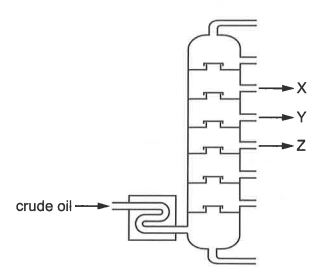
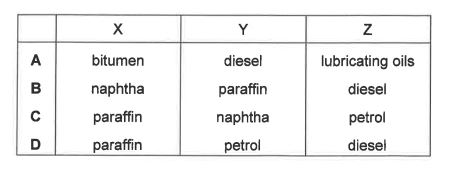
Among the three outlets shown, X (top) must be the lightest and Z (bottom) the heaviest. Row B: X = naphtha, Y = paraffin, Z = diesel — light → middle → heavy. Matches the volatility order. ✓
A places bitumen at X (the top) — bitumen is the heaviest fraction and should be at the bottom, not the top. C and D both place a heavier fraction above a lighter one (paraffin above naphtha; petrol below paraffin) — the wrong way round in a fractional column.
Get the Sec 3 / Sec 4 recording package
Every O Level Pure Chemistry TYS MCQ solution video, plus full Sec 3 / Sec 4 topic recordings.
Find out more