2023 O Level Chem P1 Q33 — Corrosion of Metals Solution
Question
Video Solution
Explanation
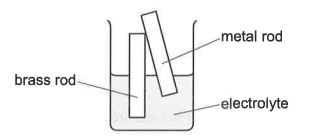
Answer: C. In a galvanic pair, the more reactive metal is the anode and corrodes; the less reactive one is the cathode (protected). Within brass, Zn (more reactive) normally corrodes first while Cu is protected.
Pair brass with a metal more reactive than Zn (Ca, Mg, Na) — that outside metal becomes the sacrificial anode and both Cu and Zn inside the brass are protected (cathode). So options A (calcium), B (magnesium) and D (sodium) all protect brass; they don't make both metals in brass corrode.
Pair brass with a metal less reactive than Cu — only silver fits here. Now Cu in brass is anodic relative to Ag and corrodes; Zn (still more reactive than Cu) also corrodes as the brass becomes the overall anode. Both metals in the brass corrode. Option C is correct.
Get the Sec 3 / Sec 4 recording package
Every O Level Pure Chemistry TYS MCQ solution video, plus full Sec 3 / Sec 4 topic recordings.
Find out more