2025 H2 Chem P1 Q17 — Halogenoalkane Solution
Question
Student 1 - This compound is definitely a halogenoarene, but it is not possible to state which halogen is present.
Student 2 - This compound is definitely not a halogenoalkane.
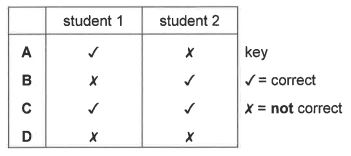
Which students are correct?
Video Solution
Explanation
The answer is D (neither student is correct).
A halogenoalkane is hydrolysed on warming with aqueous silver nitrate, and the halide ion released forms a precipitate of AgX. No visible change after one hour means no halide ion was released.
• Student 1 is not correct: the result only shows that the compound is not a chloroalkane, bromoalkane or iodoalkane. The compound need not contain a halogen at all (for example, an alkane gives no precipitate either), so it cannot be said to be definitely a halogenoarene.
• Student 2 is not correct: the compound could be a fluoroalkane. The C-F bond is so strong that it is not hydrolysed, and AgF is soluble anyway, so a fluoroalkane gives no visible result.
• A is wrong: student 1 is not correct.
• B is wrong: student 2 is not correct.
• C is wrong: neither student is correct.
Want Mr Khemistry to teach you this?
Join a live JC H2 Chemistry class at Bukit Timah, Tampines, or online. Come for a trial lesson, no obligation.
Book a trial classPractice this topic
20+ more Halogenoalkane questions with shuffled options in ChemBank, free for everyone. Want more? The ChemBank Premium ($100/month) unlocks 4,000+ TYS and Prelim questions, Paper 2 & 3 practice with worked solutions, and all simulations.
Open ChemBank free