
How to Study Chemistry If You’re Not a Science Person


Key Takeaways
Understanding Over Memorisation:
Focus on the “why” rather than relying on rote memorisation.
Use Interactive Tools:
Simulations, 3D models, and online courses make abstract chemistry concepts easier to visualise and understand.
Apply to Real-World Scenarios:
Relating chemistry to everyday life makes studying more engaging and memorable.
Break Down Complex Problems:
Tackle equations and calculations step by step to simplify challenging concepts and avoid mistakes.
Get Chemistry Tuition:
Tuition provides structured lessons, exam techniques, and expert support to help strengthen weak areas and boost confidence.
How to Study Chemistry Effectively
Many students believe that excelling in chemistry requires being a “science person”—someone who naturally grasps formulas, equations, and abstract concepts. But that’s not always the case! The truth is, chemistry is a subject that anyone can master as long as you understand core concepts, use effective study techniques, and know how to apply logical problem-solving skills.
Ready to transform the way you learn? Here’s how to study chemistry in a way that makes it more approachable, helping you study smarter and boosting your confidence in the subject.
1. Understand Concepts Instead of Memorising
Memorising facts and theory without understanding the “why” can easily lead to confusion, especially when faced with application-based questions. Instead of relying on rote memorisation, focus on conceptual chemistry learning—grasping the key ideas behind how certain chemicals react and behave.
For example, rather than just memorising the reactivity series of metals, try to understand why some metals react more readily than others. Similarly, instead of simply remembering pH values of certain substances, learn why acids and bases behave the way they do. Experienced chemistry tutors can guide you through these concepts with clear explanations, making them easier to understand and apply in exams.
2. Use Interactive Tools for Visual Learning
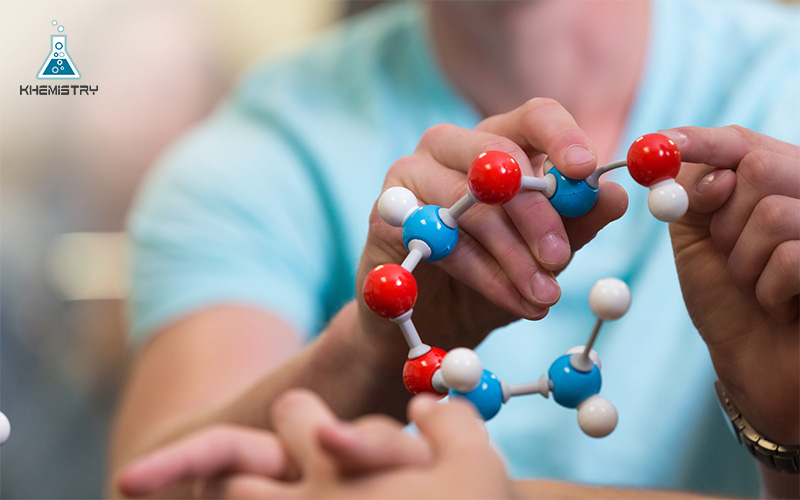
Many aspects of chemistry, such as molecular bonding, reaction mechanisms, and acid-base interactions, are difficult to grasp from a textbook alone. This is where interactive chemistry study tools can come in handy.
To study chemistry more effectively, use digital resources like online courses, simulations, or even 3D molecular modelling apps. These allow you to visualise how atoms interact in a reaction, which can help bridge the gap between abstract theory and tangible understanding.
3. Connect Theory to Real-World Applications
It’s easy to see chemistry as a set of theoretical rules, but it plays a huge role in real life. Relating chemical concepts to everyday applications can make studying more interesting and meaningful. For example, the O-level chemistry syllabus often covers practical topics like:
- How chemical reactions power batteries
- The chemistry behind food preservation (e.g., oxidation and fermentation)
- The science behind cleaning agents and soaps
By connecting classroom knowledge to real-world applications, you’ll find it easier to recall key concepts during exams. Plus, understanding these connections can boost your appreciation for chemistry beyond just passing your tests.
4. Break Down Complex Formulas and Equations Step by Step

Many students find it difficult to study chemistry because of complex chemical equations and mole calculations. However, the key to mastering them is to break each concept into smaller, manageable steps rather than trying to memorise everything at once.
For example, when balancing chemical equations, focus on one element at a time rather than trying to adjust the entire reaction at once. Similarly, when working with moles, concentration, or gas laws, write out each step clearly and double-check your unit conversions to avoid mistakes.
Practice is key—the more problems you solve, the more familiar you become with different question types and problem-solving methods. Over time, repetition helps reinforce concepts and improves your confidence in tackling complex calculations.
5. Get Chemistry Tuition for Targeted Support
Even with a strong foundation and effective self-study techniques, expert guidance can make a big difference in helping you overcome specific challenges. A good chemistry tuition class doesn’t just reteach the syllabus—it helps identify weak areas, provides targeted strategies, and offers exam-focused techniques to improve your academic performance.
O-level chem tuition classes, for example, are designed to reinforce key concepts while addressing common problem areas such as chemical bonding, mole calculations, and electrolysis. With structured lessons and personalised feedback, tuition can help you develop a deeper understanding and stronger mastery of these complex topics, giving you a competitive
Make Studying Chemistry Easier with Mr Khemistry
If you’ve always believed you’re “not a science person,” it’s time to change that mindset! With the right study strategies, interactive resources, and targeted support, you can build a strong foundation and perform well in your exams.
At Mr Khemistry, we offer comprehensive chemistry tuition for JC and secondary school, helping you learn how to study chemistry in ways that best suit you. Our experienced tutors, all former MOE (Ministry of Education) teachers, use proven teaching methods and techniques to enhance students’ understanding and appreciation of the subject.